

Are Custom Cabinets Worth It? Custom vs. Stock vs. Semi-Custom Cabinets
For many homeowners, deciding between stock, semi-custom, and custom cabinets involves more than comparing upfront costs. Each option has its own advantages, and understanding the tradeoffs can help you choose the best fit for your project.
A helpful consideration when comparing options is evaluating the price per year of use. Well-built custom cabinetry made with quality materials can easily last 30 years or more. Stock cabinets, particularly those made from particleboard or MDF, typically last around 10 to 15 years before showing significant wear or needing replacement. That means over the life of a well-built set of custom cabinets, a homeowner buying stock may replace their cabinetry two or three times over!
When you divide the total cost by years of use, custom cabinets can become surprisingly competitive from a long-term value perspective. Of course, cost-per-year is only part of the equation—the fit, the materials, storage available, and potential impact on resale all play a role. Below, we’ll walk through cabinet lifespans, the cost-per-year math, and some surprising differences between stock, semi-custom, and custom cabinets that you might not expect…
In This Article
- How long custom vs. semi-custom vs. stock cabinets actually last, and why
- The real cost-per-year math of all three
- Why the lifespan gap exists between materials
- Where custom cabinets excel
- Where semi-custom cabinets fit in
- When stock cabinets are still the right choice
- The Lake Country Custom Cabinets difference
- FAQ
How Long Do Custom Cabinets Last, Compared to Stock?
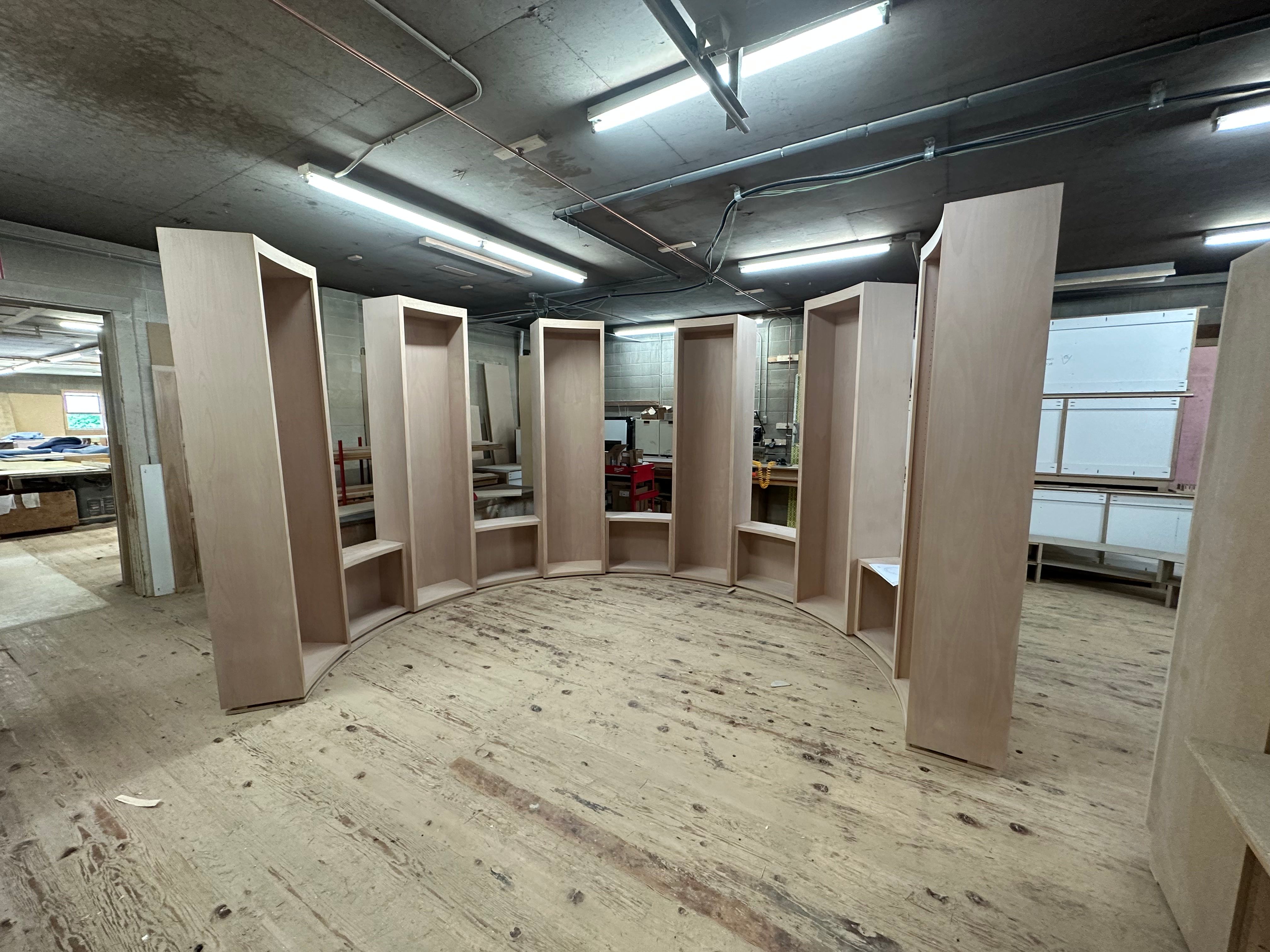
Stock cabinets are mass-produced to standard sizes, usually with particleboard or MDF boxes, thin laminate or thermofoil surfaces, and doors and drawers held together with staples or cam-lock fasteners—prioritizing manufacturing efficiency. In a working kitchen, that construction lasts on average for 10-15 years before showing signs of significant wear or structural failure. This may include problems like warped doors, loose drawer boxes, delamination, or moisture damage in sets around the sink or dishwasher.
Custom cabinets are built from the ground up with quality materials and techniques. While each project varies, this can include solid plywood boxes instead of particleboard, hardwood doors and face frames instead of thermofoil or laminate, and joinery like dovetailed drawers instead of staples. That's why well-built custom cabinetry often lasts 30 years or more, even outlasting the countertops, flooring, and the appliances around it.
Custom vs. Stock Cabinets: The Real Cost-Per-Year Math
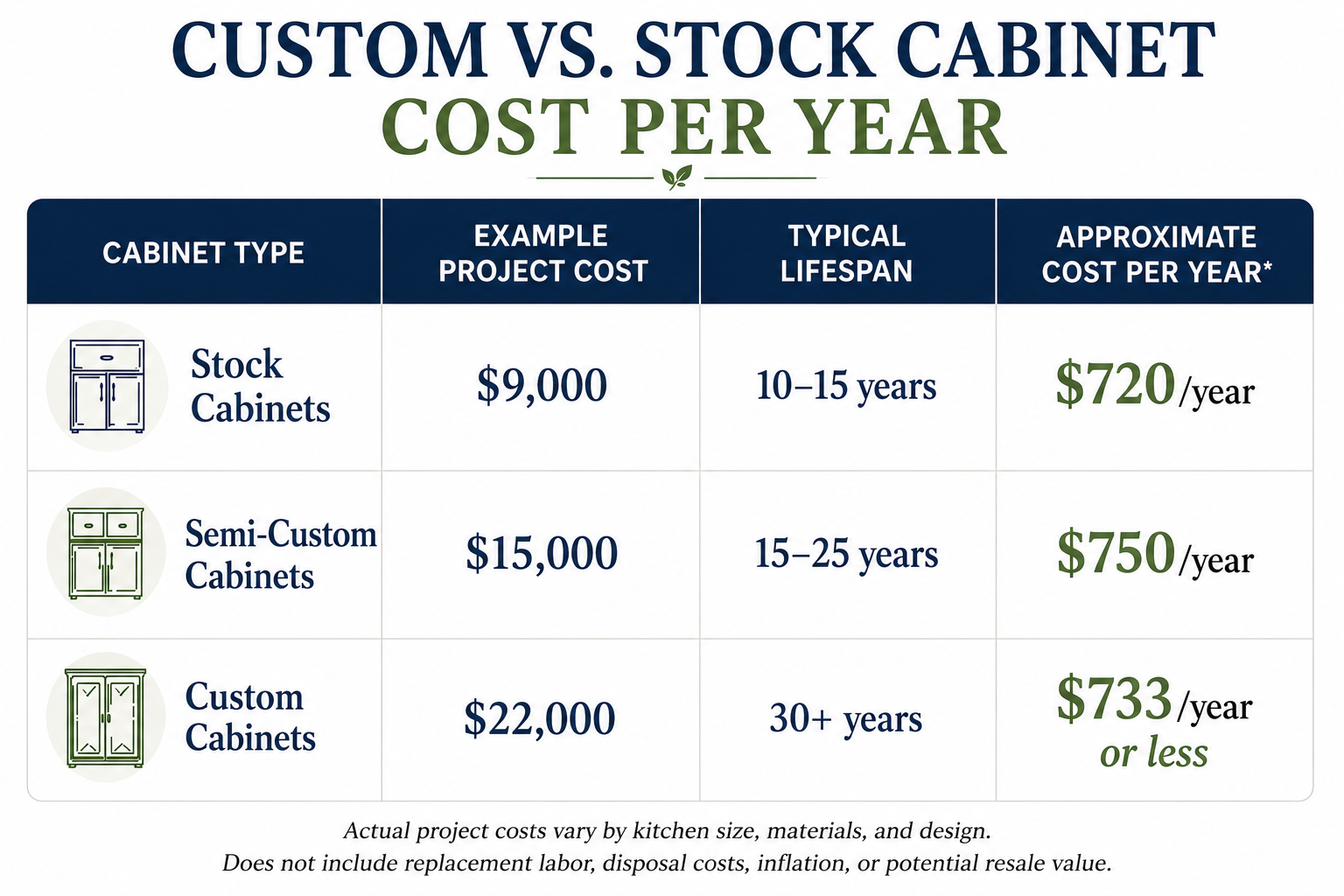
One way to compare your options is to look beyond the upfront price. For example, if a stock kitchen needed replacing every 12 years, a homeowner could go through three sets of cabinets over a 36-year period, along with the labor and disruption of each replacement. A well-built custom kitchen may cost more initially, but can last for decades.
Evaluating cabinetry this way can provide a different perspective on overall value. While upfront cost is an important consideration—lifespan, maintenance, replacement costs, functionality, and even resale appeal can all influence which option makes the most sense for your home.
Every kitchen and budget is different, which is why we always build our quotes around your specific space!
Why the Lifespan Gap Exists
The durability difference between custom, semi-custom, and stock cabinets comes down to four things, and they center on how the cabinet is built:
- Materials. Plywood resists moisture, holds screws securely, and doesn't swell or delaminate the way particleboard can near dishwashers, sinks, and humidity.
- Joinery. Dovetail joints and screwed, glued construction hold up to years of daily opening and closing. Stapled or cam-lock joints often loosen over time.
- Fit. Custom cabinets are built to your room's exact wall, floor, and ceiling measurements. Shims and filler panels are used where needed, but custom work makes better use of every inch, ultimately creating a better overall fit.
- Hardware. Custom cabinetry typically uses heavier-duty, soft-close hinges and drawer slides rated for higher weight and more open-close cycles than what's installed in most stock cabinets—hardware that gets used dozens of times a day is often where stock cabinets show wear first.
Stock vs. Custom Cabinets — Making the Most of Your Space
Durability is one important difference between stock and custom cabinets, but it's not the only one. Most stock cabinets come in fixed-width increments, which means they may require filler strips or leave unused space in kitchens that aren't perfectly standard, and many kitchens aren't. Storage that could become a pull-out pantry or corner lazy Susan may instead become space that's difficult to use efficiently.
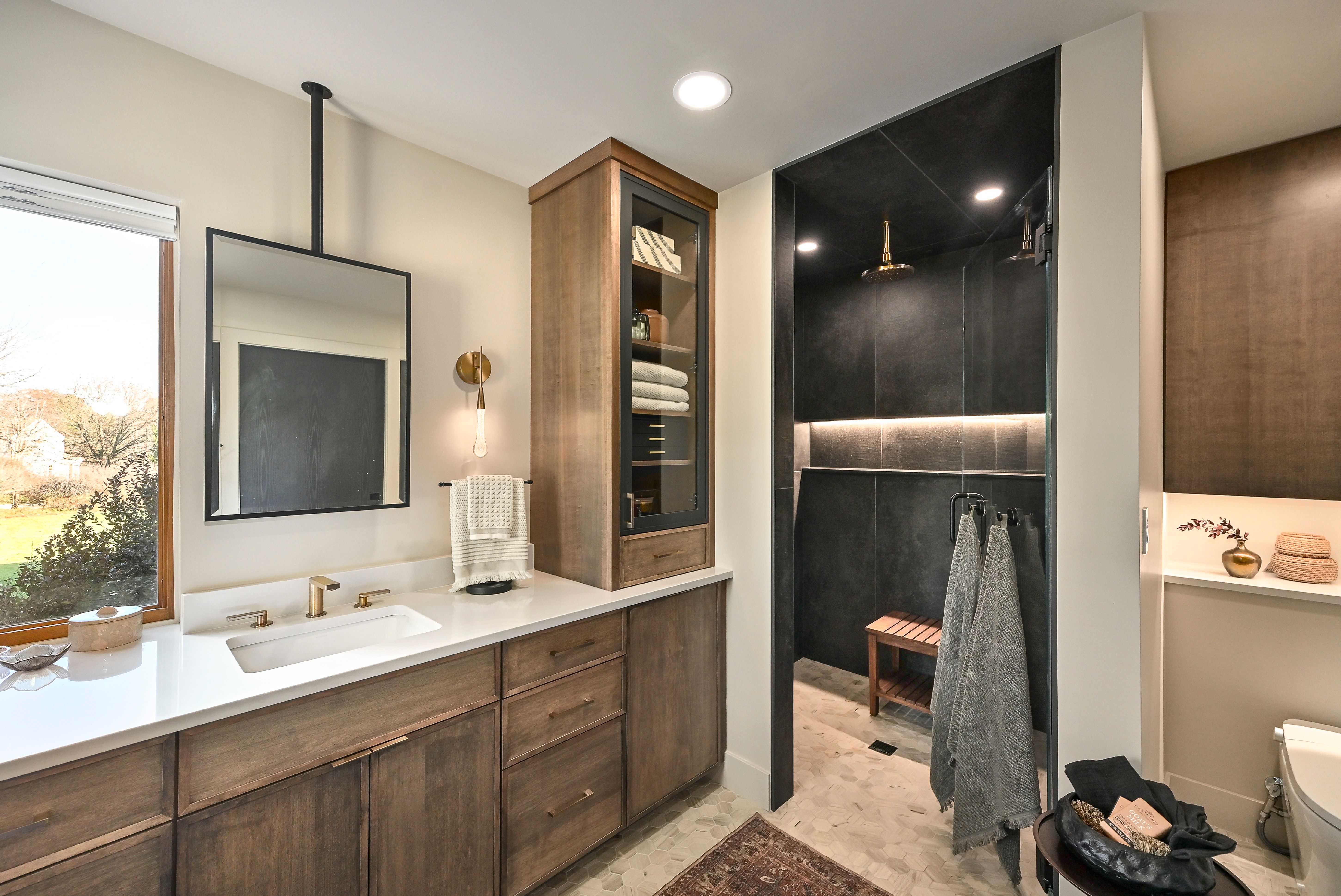
On several projects, homeowners came to us because they simply couldn't find a stock vanity small enough for their space—the available options were either too wide or too deep. So we designed and built vanities to the exact dimensions of the room. That's a real advantage of custom cabinetry: you're not limited to standard sizes.
There's also a resale consideration. For example, buyers and real estate agents consistently point to kitchen quality as one of the first things that shapes a buyer's impression of a home. While resale value depends on many factors, quality cabinetry is often viewed as a long-term investment in both function and appearance.
Where Do Semi-Custom Cabinets Fit In?
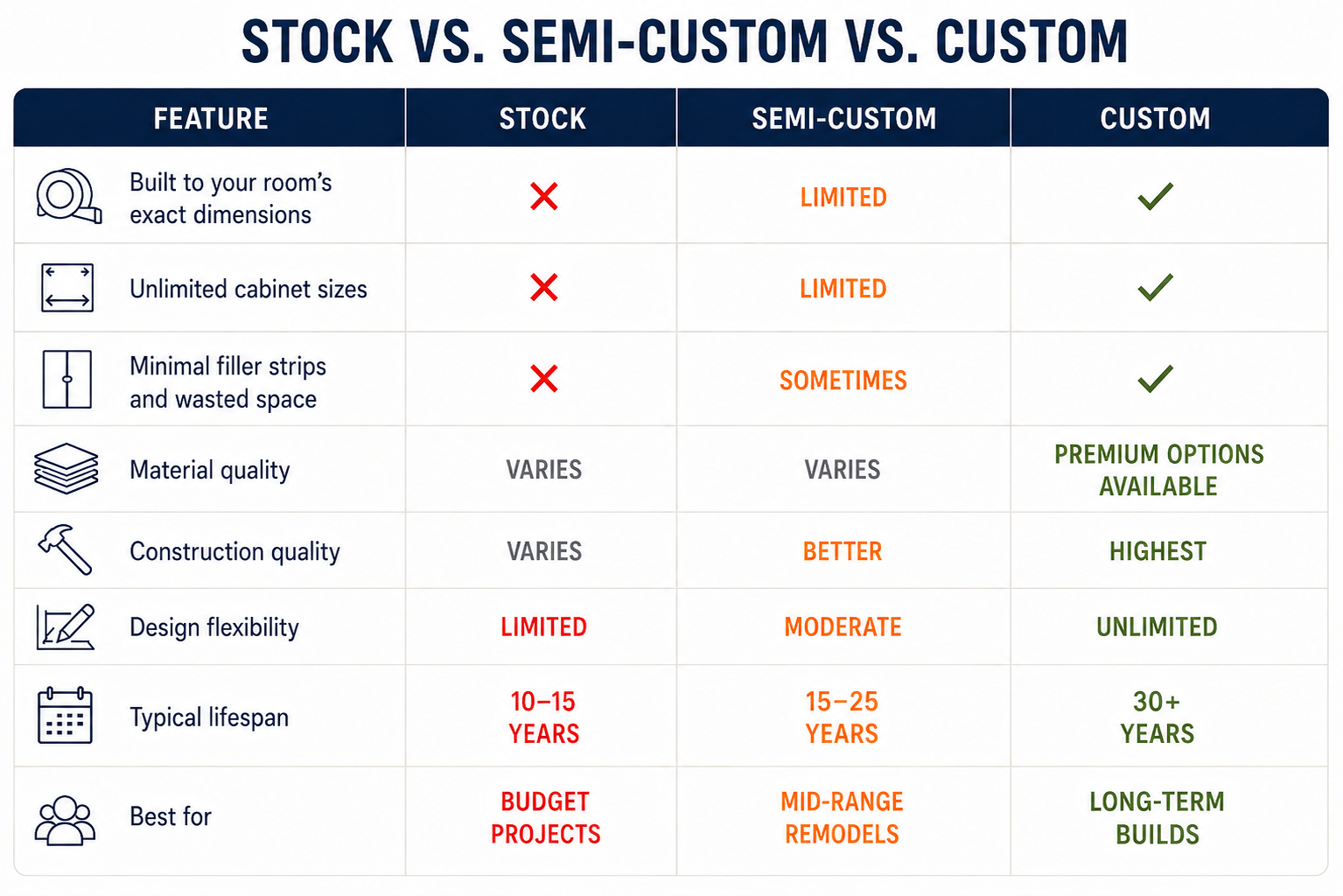
You may also encounter a third option while shopping: semi-custom cabinets. Despite the name, these aren't a halfway version of custom—they're stock cabinets with limited modification options, like a wider finish selection or size adjustments in smaller increments. For a space with a fairly standard layout and a homeowner who wants more design choice without a fully custom budget, semi-custom can be the right fit.
As a rough industry reference point, stock cabinets often cost around $100–$400 per linear foot, semi-custom around $150–$700, and fully custom starting near $1,000 and up, though real pricing varies significantly by cabinet maker and project scope.
However, the main limitation with semi-custom is the same thing that makes it more affordable than custom: it's built from standard modules rather than to your room's exact dimensions. In a space with unusual angles, ceiling heights, or tight corners, that can mean the same filler-and-fit compromises as stock.
Materials and construction quality can also vary across semi-custom manufacturers as well—from particleboard boxes to plywood, basic to premium hardware. Whether semi-custom is the right call comes down to your layout, the specific line, and your project priorities.
When Stock Cabinets Are Still the Right Choice
But custom or semi-custom aren’t always the right call for every project. Stock cabinets may make sense if:
- You're renovating a rental property or preparing a home for a quick flip
- Your pricing is fixed, and a functional kitchen at a budget cost is the priority
- You don't plan to stay in the home long enough to benefit from the longer lifespan
If your timeline or budget points toward stock, that's a perfectly legitimate choice, we just recommend you go in knowing the tradeoffs above.
Ultimately, whether custom cabinetry is the right choice depends on your home, your budget, and your goals—but if you're looking for a cabinetmaker who will help you find the right solution, we'd love to talk with you!
The Lake Country Custom Cabinets Difference
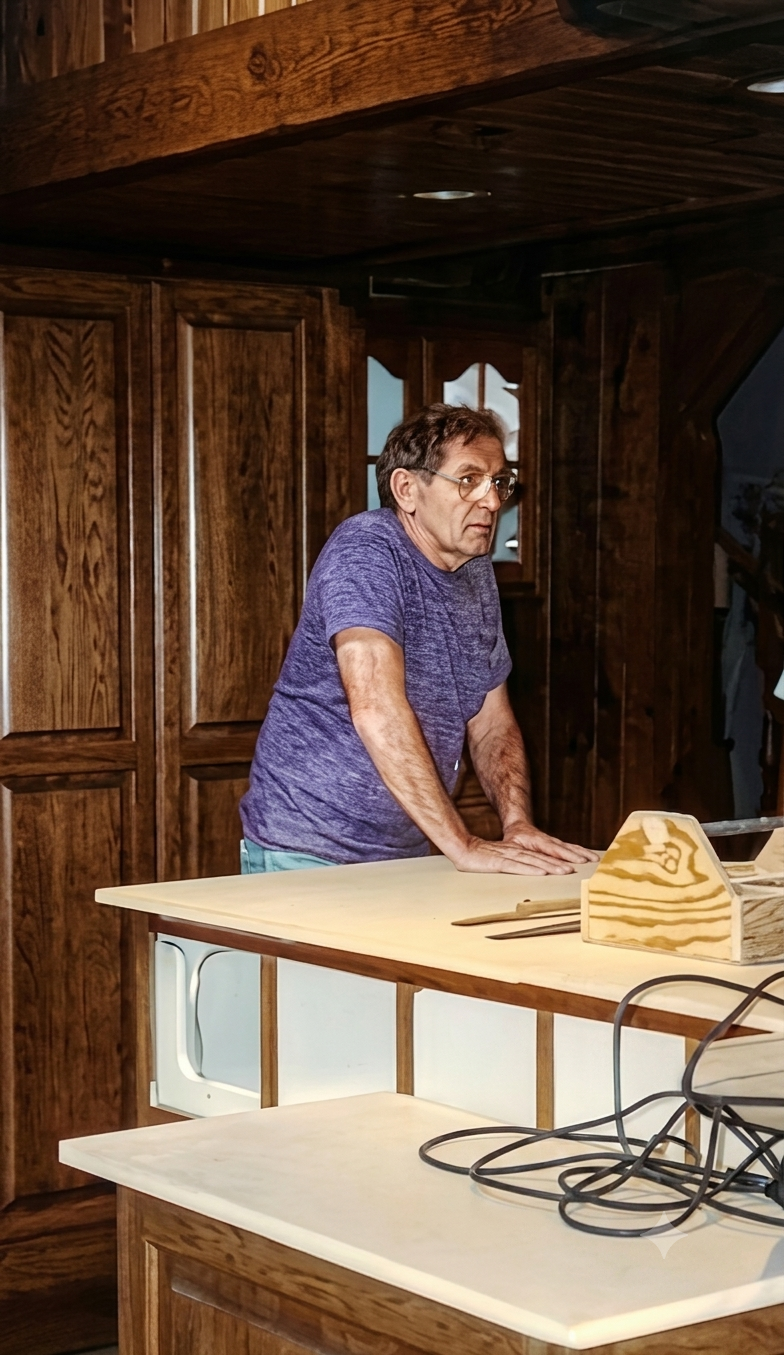
Lake Country Custom Cabinets designs, builds, and installs custom cabinetry. Every cabinet is built at our shop in Menomonee Falls, where we oversee each project from design through installation — allowing us to maintain exceptional craftsmanship while working closely with customers. It's an approach that reflects our commitment to quality, attention to detail, and personalized service.
Our roots go back to 1959, when the company was founded as O.H. Ewert. Today, under Tom Dahms — who brings decades of hands-on cabinet-making experience — that same commitment to craftsmanship continues for homeowners in Menomonee Falls, Brookfield, Waukesha, and throughout southeast Wisconsin, along with commercial spaces like medical and dental offices. Browse our design services or take a look at completed residential and commercial projects in our gallery.
FAQ
Are custom cabinets worth it compared to stock cabinets?
Yes, for most homeowners staying in their home long-term, the investment more than pays off. Custom cabinets cost more upfront but can last 30 years or more versus 10–15 on average for stock, which typically makes the cost-per-year comparable or even more economical, on top of a better fit and generally higher resale appeal.
How much more do custom cabinets cost than stock cabinets?
Custom cabinets typically do cost more upfront than stock or semi-custom, but the gap varies widely based on materials, cabinet count, and design complexity. Because every project is different, the most accurate way to know your real numbers is to request a project-specific quote.
Do custom cabinets really increase home resale value?
Kitchen quality is one of the first things buyers and agents notice, and custom cabinetry is widely seen as a sign of a well-maintained home. It won't guarantee a specific return, but it's consistently cited as one of the stronger value-adding features in a remodel.
How long does a custom cabinet project take from design to installation?
Timelines depend on project size and complexity, but custom cabinetry generally takes longer than pulling stock or semi-custom, since every piece is designed and built specifically for your space. We'll walk you through a timeline that fits for you during your consultation.
Is custom cabinetry only for kitchens?
No—we design and build custom cabinetry for bathrooms, mudrooms, closets, garages, and commercial spaces like offices, waiting rooms, and reception areas, in addition to kitchens.
Is semi-custom cabinetry a good compromise between custom and stock?
It can be, for kitchens with only minor layout quirks—semi-custom offers more finish and sizing flexibility than stock at a lower cost than fully custom. But it's still built on standard size increments, so spaces with real structural quirks will run into a smaller version of the same fit problems stock cabinets have.
Where can I get custom cabinets made in Waukesha County?
Lake Country Custom Cabinets designs, builds, and installs custom cabinetry from our shop in Menomonee Falls, serving Waukesha County, Brookfield, Waukesha, and communities throughout southeast Wisconsin.
Ready to see what custom cabinetry costs for your space? Request a quote from Lake Country Custom Cabinets today.